The path to enlightenment, it turns out, sometimes involves sidestepping a wall of selfie sticks and wondering whether anyone has ever reached serenity while being elbowed by a stranger in a sun hat.
Kyoto's most celebrated Zen gardens draw millions of visitors annually, each seeking the same thing: a moment of tranquility in carefully raked gravel and perfectly positioned stones.
The irony isn't lost on anyone standing shoulder-to-shoulder with tour groups at Ryoan-ji's famous rock garden, wondering where exactly the peace part begins.
Yet locals manage to find genuine calm in these same spaces, even during peak seasons. The difference isn't just about knowing secret entrance times or hidden side gates (though those help). It's about understanding what these gardens were designed to teach in the first place.
Temple Garden Kyoto
Understanding What Zen Gardens Are Actually For
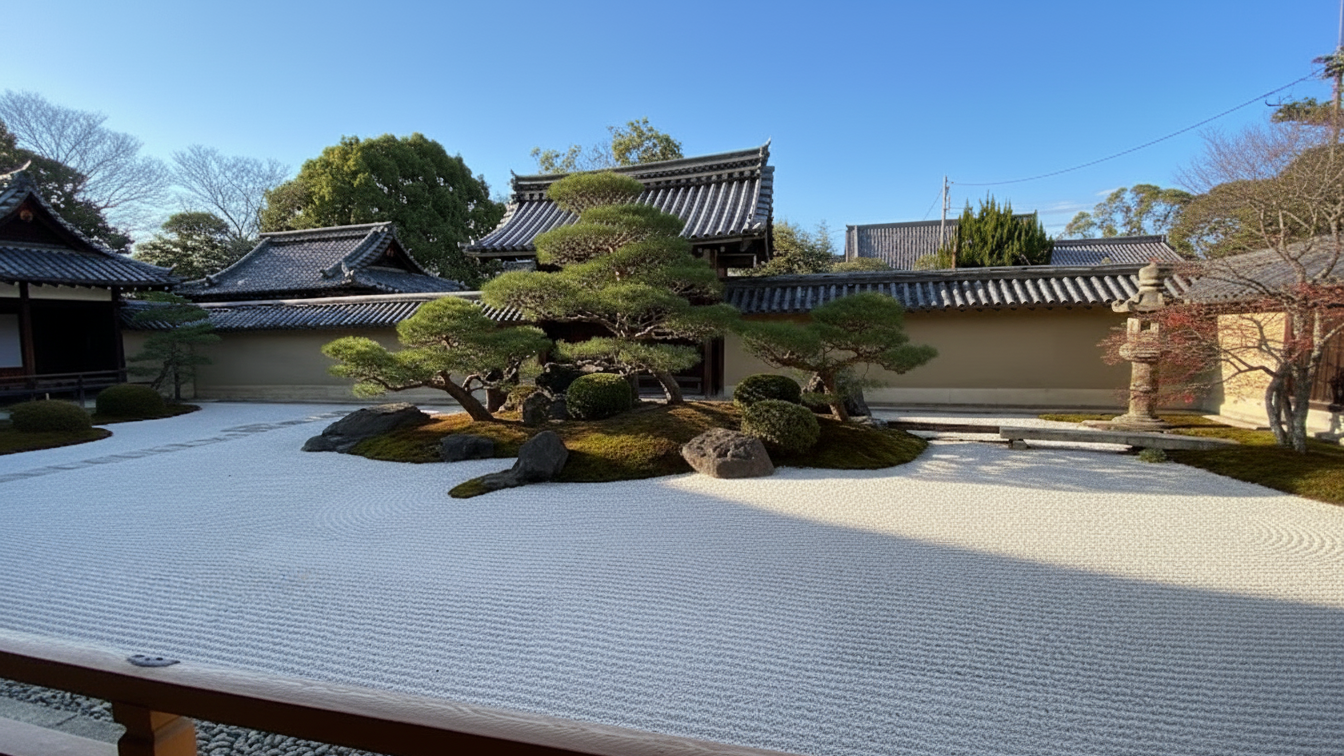
The karesansui, or dry landscape gardens, that define Kyoto's temple complexes weren't created to be admired in solitude.
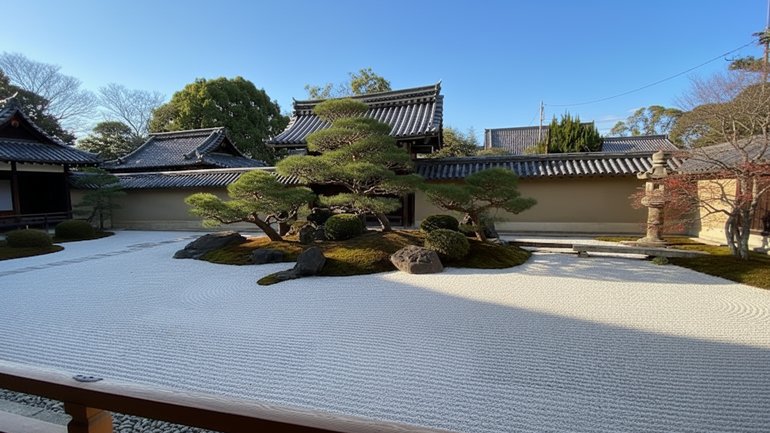
They're teaching tools, meditation devices built on principles that function regardless of how many people share the viewing platform. The raked gravel patterns represent water, the rocks suggest mountains or islands, and the negative space between elements matters as much as the elements themselves.
This matters because contemplation isn't about achieving silence. It's about practicing stillness internally while accepting external conditions as they are.
The asymmetry you'll notice in every authentic garden reflects wabi-sabi philosophy: beauty in imperfection, including the imperfect circumstance of crowds. Understanding this changes the experience from "ruined by tourists" to "practicing presence despite distractions," which is arguably more Zen than sitting alone would be.
Connecting with guides through City Unscripted can deepen this understanding. Local hosts explain the symbolic language embedded in garden design: why certain stones face particular directions, how seasonal changes reveal new meanings, what the temple's founding monk intended visitors to contemplate.
These insights shift your attention from the crowd to the deliberate contrasts between rough and smooth textures, light and shadow, emptiness and form. Suddenly you're studying traditional Zen gardens as they were meant to be experienced, as lessons in perception itself.
Why Kyoto's Famous Gardens Are Packed (and How to Navigate Them)
The crowds follow predictable patterns if you know where to look. Cherry blossom season in early April and autumn foliage in mid-November bring the heaviest traffic, with tour buses arriving at major sites between 10 AM and 3 PM. Summer's heat thins crowds slightly, while winter offers the clearest paths. Cold mornings in January see surprisingly few visitors at even the most famous temples.
Best Times to Visit
Early morning means different things at different gardens. Kinkaku-ji opens at 9 AM and sees immediate crowds, but Ginkaku-ji at 8:30 AM offers a brief window of relative calm before 9:30 AM.
Weekday mornings before 10 AM consistently outperform weekends. Late afternoon presents another opportunity: the hour before closing, when tour groups have departed but individual travelers linger, creates unexpected pockets of quiet.
How Locals Move Through Busy Temples
Kyoto residents approach famous temples differently than tourists rushing between Instagram locations. They enter with lowered expectations about "having the place to yourself" and higher attention to small details: a particular viewing angle that reveals three elements in perfect alignment, a stone lantern catching afternoon light, the sound of wind through bamboo beyond the main garden.
They also know the side gardens. At Nanzen-ji's main complex, most visitors photograph the massive Sanmon gate and move on, missing the smaller Nanzen-in sub-temple with its circular pond garden. Equally beautiful, significantly emptier.
At Daitoku-ji, the main temple grounds contain several sub-temples, each requiring separate admission. Tourists cluster at one or two while locals explore lesser-known options like Zuiho-in or Koto-in.
I still remember an early winter morning at Nanzen-ji when a gardener paused his raking as I walked by. The gravel lines he'd drawn were already rippled from a breeze that had passed moments earlier. He noticed me looking and said quietly, “It's never meant to stay perfect.” Then he shrugged and kept working. That tiny exchange changed the way I saw every garden that followed.
Mindful Framing Techniques to Stay Present
The practiced approach involves selecting one element (a specific rock grouping, a moss pattern, a sight line) and returning attention to it each time distraction occurs.
Garden designers intended this: the repetitive patterns in raked gravel train the eye to follow lines, creating a visual meditation that persists regardless of peripheral activity.
Hidden Gardens Locals Love When They Need Real Quiet
When Kyoto residents want genuine solitude, they skip the famous names entirely. Shisen-do in northern Higashiyama offers terraced gardens with limited visitor capacity, resulting in naturally controlled crowds. The temple's design incorporates shakkei (borrowed scenery), framing distant mountains as part of the garden composition. This technique opens the space visually even when viewing platforms feel cramped.
Jiko-in, over in nearby Yamatokōriyama, sees almost no foreign tourists at all. It's a small detour, but the borrowed-scenery garden overlooking the rural landscape feels like stepping sideways in time.
The temple's weathered wood architecture and unpruned approach to the garden create a different aesthetic: less manicured perfection, more organic integration with the surrounding environment.
Within Kyoto proper, Tofuku-ji's Hojo gardens present an unexpected option. While the temple's autumn foliage draws enormous crowds, its four distinct Zen gardens (designed by landscape architect Shigemori Mirei) receive less attention during other seasons.
The modern geometric patterns differ from classical garden design, offering fresh perspective on Zen principles expressed through contemporary form.
Kennin-ji temple in Gion contains two superb gardens that many visitors overlook while focused on the famous twin dragons painted on the ceiling. The courtyard gardens here use traditional elements (raked gravel, carefully positioned rocks) in more intimate spaces where small groups naturally disperse rather than clustering.
How Local Hosts Unlock Calm Corners
Experienced Kyoto guides know which temple gates open to side paths that bypass main viewing areas, which smaller halls offer garden views without crowds, and which times of day shift the light to reveal hidden compositions.
They understand seasonal schedules: when certain sub-temples open for limited periods, offering rare access to normally closed gardens.
More valuable than logistics, though, is contextual knowledge. A guide might explain the specific Rinzai Zen lineage of a particular temple and how that sect's teachings influenced the garden's design differently than Soto Zen gardens.
They'll point out details invisible to untrained eyes: how stepping stones are placed to control walking pace and viewing angles, why certain plants appear only in specific gardens, what renovation history reveals about changing aesthetic preferences across centuries.
This kind of expertise transforms efficient touring into meaningful understanding. It helps travelers recognize what they're actually looking at rather than simply photographing what appears photogenic.
Putting It All Together: A Sample "Quiet Morning in Kyoto" Itinerary
Begin at Ginkaku-ji at 8:30 AM opening, before crowds arrive from central Kyoto hotels. Spend forty-five minutes in the moss garden and sand cone formations. Walk the adjacent Philosopher's Path while it's still peaceful (not the entire route, just the northern section to Eikan-do).
Instead of entering Eikan-do's main hall, explore the smaller garden spaces in the temple's outer buildings.
From there, taxi to Shisen-do before late morning crowds, allowing an hour to sit with the garden's atmosphere. End at a neighborhood temple near your accommodation. Most Kyoto neighborhoods contain small temples with simple gardens that never see tour buses.
These offer exactly what you sought at famous sites: space to breathe, time to observe, silence to think.
Final Takeaway
The paradox resolves itself once you stop fighting it. Kyoto's gardens teach acceptance of what is, not pursuit of ideal conditions. Crowds become part of the practice rather than obstacles to it.
They're external circumstances that test whether your stillness depends on emptiness or persists regardless.
Armed with strategic timing, philosophical understanding, and local knowledge of alternatives, you'll find that peace in Kyoto was never about having gardens to yourself. It was about bringing your attention fully to where you already are.